A lace elastic Band may curl or roll along its edges when the fabric structure, elastic tension, yarn distribution, or finishing process is not properly balanced. This problem is particularly noticeable in lingerie, underwear, waistbands, garment trims, and other applications where the elastic must remain flat against the body. Edge curling not only affects appearance but can also reduce wearing comfort, sewing efficiency, and finished-product quality.
For garment manufacturers, wholesalers, and importers, understanding the causes of edge curling is essential when evaluating lace elastic quality. The problem is rarely caused by a single factor. Yarn selection, knitting tension, elastic thread arrangement, heat setting, dyeing conditions, and dimensional stability all influence the final performance of the band.
One of the most common causes of lace elastic band curling is uneven tension between the elastic yarns and decorative yarns. During knitting, elastic threads such as spandex are stretched and integrated with nylon or polyester yarns. After the fabric is released from the machine, the elastic threads recover toward their original length.
If the elastic yarns are distributed unevenly across the width, one section may contract more strongly than another. This creates an imbalance in internal tension, causing the edges to bend inward or outward instead of remaining flat.
The problem can become more obvious after cutting, washing, or repeated stretching. For example, if the edge contains a higher concentration of elastic yarn than the center, its recovery force may be stronger, pulling the fabric toward the edge.
During production, manufacturers must control yarn feeding speed, spandex draft ratio, knitting tension, and machine settings. These parameters determine how elastic yarns interact with the decorative structure. A qualified Lace Elastic Band Manufacturer should establish consistent tension settings and monitor fabric width and recovery throughout production.
The knitting structure determines how loops connect, distribute tension, and recover after stretching. Different lace patterns have different levels of structural stability. Openwork patterns, large decorative loops, and irregular mesh sections may be more sensitive to tension differences than compact structures.
Edge construction is particularly important. A Lace Band with a narrow or weak selvage may not have enough structural support to resist the contraction of the central elastic section. If the edge loops are too loose, the band may curl. If they are too tight, the edge may become stiff and pull the fabric into a curved shape.
During machine setup, the knitting technician must coordinate needle selection, stitch density, yarn tension, and pattern configuration. The edge structure should be designed to balance elasticity with dimensional stability rather than simply increasing the amount of elastic yarn.
For custom designs, a Lace Elastic Band Factory should evaluate the relationship between pattern density and edge construction before mass production. Adjusting the edge loop structure can often improve flatness without sacrificing the decorative appearance of the lace.
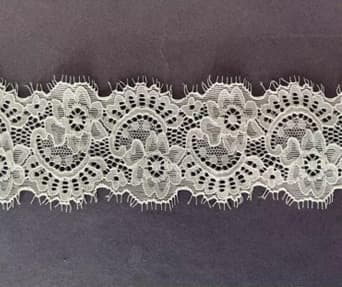
The quality and consistency of raw materials directly influence the dimensional stability of Lace Elastic Bands. Nylon and polyester yarns provide the decorative structure, while spandex supplies stretch and recovery. Differences in yarn thickness, elasticity, elongation, and shrinkage can create uneven behavior across the finished fabric.
Spandex with inconsistent elastic recovery may produce different contraction forces during relaxation. Similarly, variations in nylon or polyester yarn thickness can affect stitch formation and fabric density.
Material compatibility also matters during dyeing and heat treatment. Different fibers respond differently to temperature and chemical conditions. If the materials shrink at different rates, internal stress may develop and cause the edges to curl after finishing.
Incoming material inspection should therefore include yarn specifications, linear density, tensile properties, elongation, and consistency between batches. Manufacturers should also verify that the selected yarn combination is suitable for the intended knitting structure and finishing conditions.
Heat setting helps stabilize the dimensions of lace elastic fabric and reduce residual stress created during knitting. During this process, controlled temperature and fabric tension allow the material to establish a more stable structure.
However, excessive temperature, uneven heating, or incorrect overfeed settings can create additional dimensional problems. If the fabric is stretched too tightly during heat setting, it may contract unevenly after cooling or washing. Insufficient heat setting may leave residual tension that becomes visible during subsequent processing.
Dyeing and washing can also affect edge stability. Changes in temperature, chemical exposure, mechanical agitation, and drying tension may alter yarn shrinkage and elastic recovery. If the fabric is not properly relaxed before finishing, existing tension differences may become more pronounced.
To maintain consistency, production teams should control heat-setting temperature, processing speed, fabric width, overfeed, and cooling conditions. Finishing parameters should be validated for each material combination rather than copied across different lace designs.
Sometimes a lace elastic band appears flat during production but begins curling after cutting or sewing. This happens because cutting releases part of the tension that was previously distributed across the continuous fabric. If the knitted structure is not dimensionally stable, the newly exposed edge may contract unevenly.
Sewing can introduce additional distortion. Excessive thread tension, unsuitable stitch density, incorrect feeding speed, or uneven fabric feeding may stretch one side more than the other. When the sewn section relaxes, the lace can develop waves, rolling, or edge distortion.
For garment manufacturers, it is important to evaluate lace elastic bands under actual sewing conditions. A product that passes a basic visual inspection may still create problems when attached to underwear, lingerie, or other stretch garments.
Manufacturers should assess cutting stability, sewing compatibility, and recovery after repeated stretching. Buyers should also communicate the intended sewing method and garment application when requesting customized specifications.
Visual inspection alone cannot determine whether a lace elastic band will remain flat during actual use. Reliable quality evaluation should combine dimensional measurements, stretch testing, recovery testing, and washing assessments.
Width consistency is an important starting point. Samples should be measured at multiple positions to identify variations across the production roll. The band should also be laid flat without external tension to check whether either edge naturally curls.
Stretch and recovery tests help identify uneven elastic behavior. The sample is extended to a defined percentage of its original length and then released. Engineers can observe whether the band returns evenly or develops edge distortion. Repeated stretching can reveal problems that are not obvious after a single cycle.
Washing and drying tests are equally important because moisture, temperature, and mechanical movement can change fabric dimensions. Measurements before and after washing help determine whether shrinkage or residual tension contributes to curling.
For consistent inspection, manufacturers should define sample conditioning, test dimensions, stretching force, recovery time, washing conditions, and acceptable tolerances. These procedures allow production batches to be compared using repeatable criteria.
Preventing edge curling requires coordinated control throughout the manufacturing process. Adjusting only the final finishing stage may not solve a problem that originates from uneven yarn feeding or an unsuitable knitting structure.
Experienced Lace Elastic Band Manufacturers should focus on the following quality factors:
Raw material control: Select consistent nylon, polyester, and spandex yarns with suitable elasticity and shrinkage characteristics.
Knitting control: Maintain uniform yarn tension, stitch density, and elastic yarn distribution.
Edge structure design: Balance edge loop tightness and structural support with the required flexibility.
Heat-setting control: Optimize temperature, fabric tension, and processing speed to reduce residual stress.
Finishing inspection: Check width, flatness, shrinkage, and recovery after dyeing and washing.
Final product testing: Evaluate edge behavior after stretching, relaxation, and sewing simulations.
Production records should identify machine settings, yarn batches, finishing parameters, and inspection results. When curling occurs, comparing these records helps engineers identify whether the problem comes from material variation, machine conditions, or finishing adjustments.
For overseas buyers, selecting a reliable Lace Elastic Band Supplier involves more than comparing width, color, pattern, and unit price. Edge stability directly affects garment production efficiency and the appearance of the finished product.
When evaluating Lace Elastic Band Suppliers, buyers should request samples and check whether the edges remain flat after relaxation, stretching, washing, and sewing. They should also ask about yarn composition, elastic recovery, dimensional tolerances, and finishing methods.
For OEM and private-label projects, suppliers should be able to adjust knitting structures, elastic yarn distribution, and edge construction according to the intended application. Pre-production samples should be tested using conditions similar to those in the buyer's garment factory.
It is also important to confirm whether mass-production batches follow the same material specifications and process settings as approved samples. Consistent production control helps reduce edge curling, fabric waste, sewing difficulties, and customer complaints.
Yes. Washing temperature, mechanical agitation, and uneven fiber shrinkage can release residual tension in the knitted structure, making existing edge instability more visible.
Not necessarily. Excessive or uneven spandex tension can actually increase contraction differences. Proper yarn distribution and balanced knitting tension are more important than simply increasing spandex content.
Cutting releases tension in the knitted structure. If the edge construction is unstable or elastic yarn distribution is uneven, the newly cut section may contract and curl.
No. Heat setting can reduce residual stress and improve dimensional stability, but it cannot fully correct unsuitable knitting structures, inconsistent raw materials, or severe tension imbalances.
Edge curling in Lace Elastic Band is mainly associated with uneven elastic tension, unstable knitting structures, material inconsistencies, improper heat setting, and distortion during cutting or sewing. Preventing these problems requires control over the entire manufacturing process, from yarn selection and machine setup to finishing and final inspection.
For garment manufacturers and international buyers, working with an experienced Lace Elastic Band Manufacturer and reliable supplier helps ensure consistent edge stability, comfortable stretch performance, and better sewing compatibility. Evaluating samples under realistic production and washing conditions is an effective way to reduce quality risks before placing bulk orders.

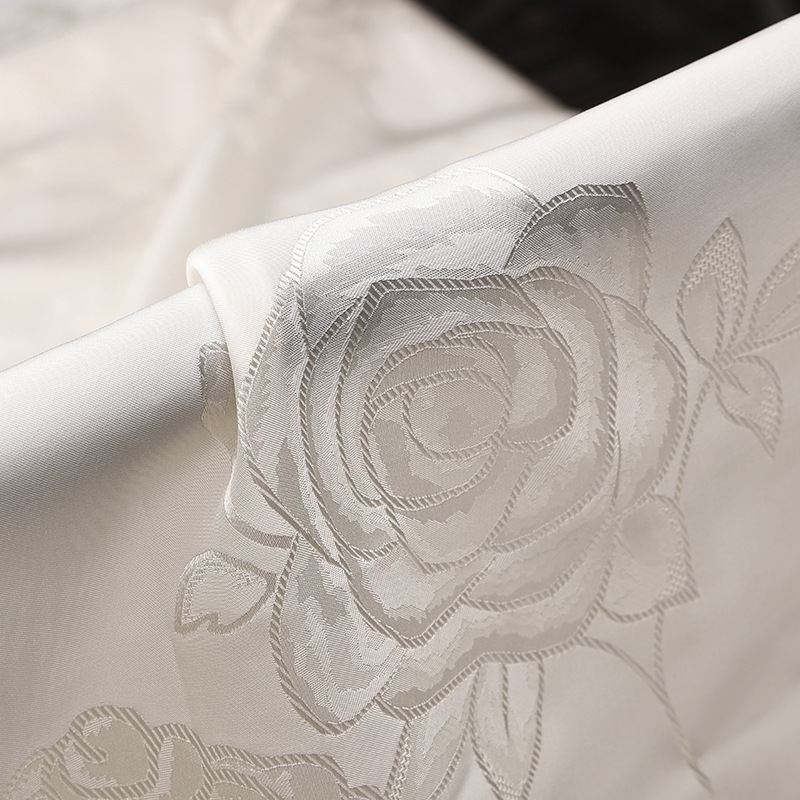
This fabric combines the smoothness and natural sheen of Mulberry Silk with the durability and versatility of Viscose, providing comfort and beauty for a variety of fashion applications.
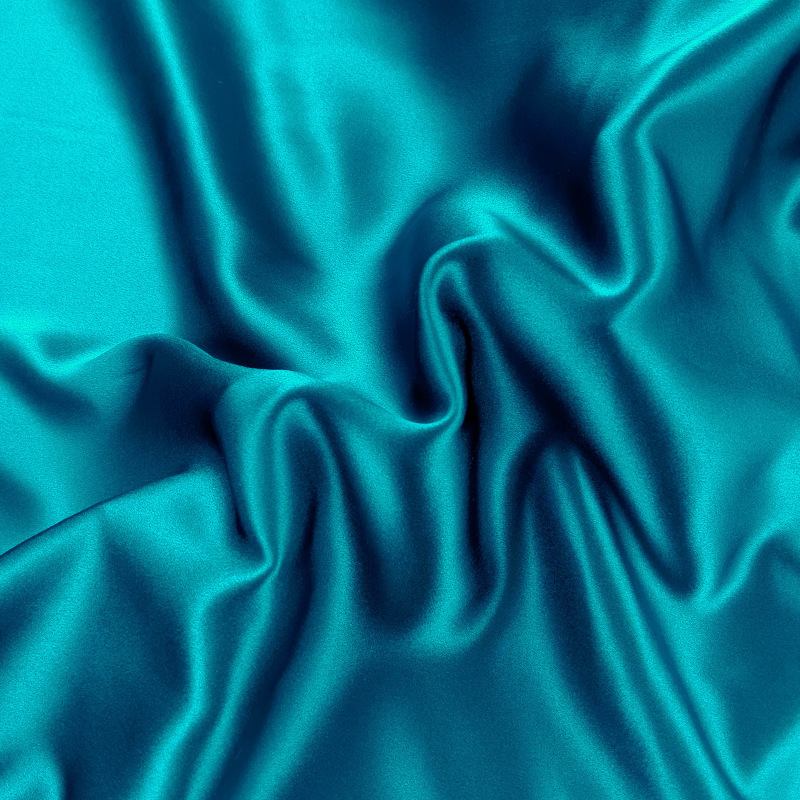
Used for all kinds of high-end silk bedding, such as silk four-piece sets, pillowcases, sheets, quilt covers, as well as silk scarves, summer pajamas, ladies' fashions and formal dresses, etc.
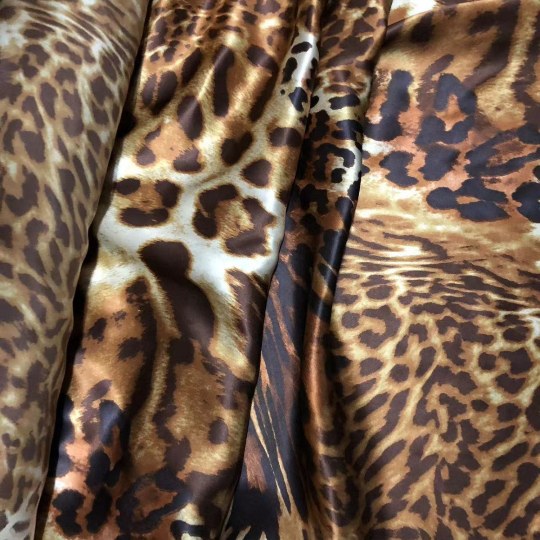
Leopard Jacquard Fabric is a luxurious and versatile textile characterized by its intricate woven patterns and elegant design.
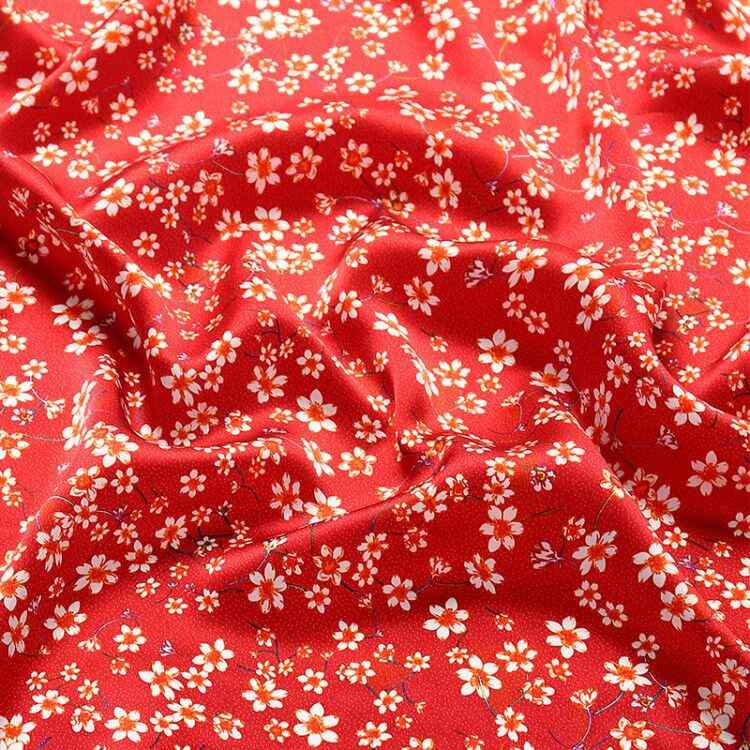
Floral Silk Fabric, crafted from Mulberry silk with a width of 140CM, a thickness of 16mm, and a weight of 68gsm, is ideal for creating elegant dresses, summer and spring outfits, luxurious sleepwear, and refined accessories like scarves and ties.
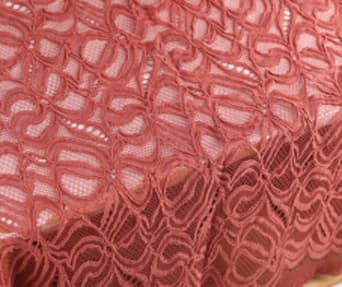
The best way to care for and wash Lace Fabric is to clean it gently using cold or lukewarm water and a mild detergent. Hand washing is recommended for delicate lace, while machine washing should only be done on a gentle cycle with the fabric placed inside
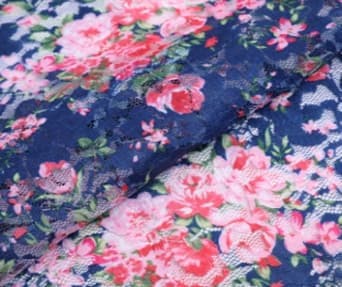
Lace Fabric can be made from a variety of materials, including cotton, polyester, nylon, rayon, silk, and spandex. Each material offers different characteristics such as softnes
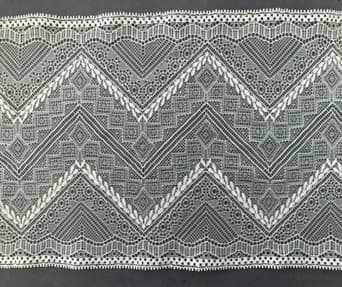
Corded lace is one of the most elegant and structurally rich types of lace used in fashion and textile design. It is widely applied in bridal gowns, evening dresses, lingerie, and decorative fabrics due to its raised outlines and three-dimensional texture. Unlike flat lace, corded lace is created by adding extra yarns or cords to emphasize floral or geometric patterns, making it more luxurious and visually striking.
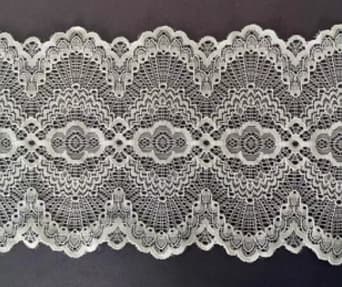
Corded lace is suitable for wedding dresses, evening gowns, blouses, skirts, lingerie, jackets, children's wear, and fashion accessories. Its raised embroidered patterns create a textured and elegant look that enhances both luxury and casual garments. Whether used as white lace or black corded lace fabric, it remains a versatile material widely used in modern fashion design.
Whatsapp: +86-137-1297-3009
Contact: Sophie Liao
Mailbox: sophie@chuanchencrafts.com
Add:Room 304, No.11, Jiaoyu Road, ZhangCun, Dongcheng Street, Dongguan City- 523112, China.

Wechat customer service
Copyright © 2026 Dongguan Chuanchen Craft Products Co., Ltd All rights reserved.